Episode Transcript
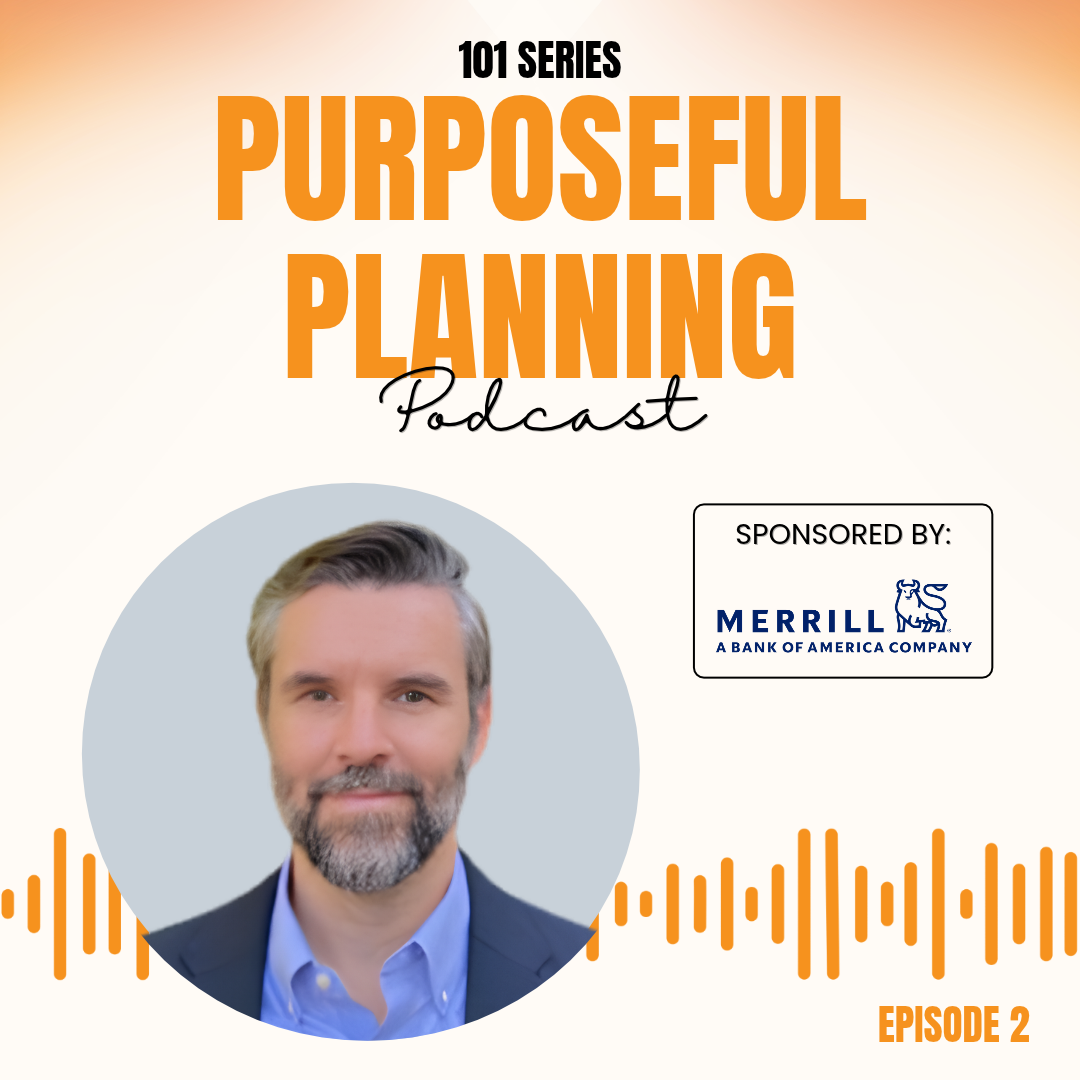
STEVE: Hello, and welcome to another episode of the PPI 101 podcast series. The Purposeful Planning Institute has long prided itself on providing a space for professionals from diverse backgrounds to gather, utilize the wisdom of their fields, and learn together how to best serve our clients and families with purpose. This breadth of knowledge and experience is a huge asset for everyone, and it sometimes poses a challenge. There's a learning curve to understanding how we all fit together in service of the families we're privileged to work with. This podcast series was conceived as a pathway to share some of the foundational concepts at the core of PPI's educational initiatives and the wisdom of our diverse membership. My name is Steve Legler. I'm a family legacy coach, and I'm happy to be the host of this episode on family systems, in which we are asking the question: What is family systems, and why does it matter for advisors to understand? Our guest is Dr. Charles Eckhart, who leads PPI's Family Systems Theory Learning Circle and is the PPI Dean of Family Dynamics Systems Theory and Relationships. Charles, welcome to the 101 Podcast Series.
CHARLES: Hi, Steve. Pleased to be here.
STEVE: All right, so we're talking about family systems, and there's a lot of people who are part of PPI, and they hear us talking about systems. And I know when I first heard about the family as a system, it sounded like it made sense to me, but I wasn't really sure what that was supposed to mean. So we're trying to sort of get into that and sort of maybe delve into three takeaways that people can walk away from listening to this podcast and have some kind of a foundation.
CHARLES: Absolutely, Steve. I'm glad to join you and together try and provide some demystifying to the utility of family systems theories in family wealth advising and the multidisciplinary approaches that practitioner members of PPI bring to their families.
STEVE: So, before we get to the three basic concepts that I want us to land on, which are wholeness and interdependence, circular causality, and homeostasis. So, if you're taking notes, these are the ones we're going to cover in depth. Charles, can you just give us some overview of family systems and family systems theory to just get us started?
CHARLES: Absolutely. So, you'll hear me aim the content of my response towards the PPI community, and I'm going to initially talk briefly about the origins of these family systems theories and what they were used for, and we'll all shift to how I believe that they can be well utilized broadly in family wealth advising. Family systems theories and other group theories, group systems theories, came about in really, there were early vestiges of this that started to grow in the 1920s and 30s in social psychology, in academic circles, and in family therapy, in mostly American, but some European and South American circles of family therapists, and the idea was, in family therapy, that the origins of an individual family member's suffering or symptoms began in family dysfunction, and that some of the symptoms of the individual, of the patient, had a systemic cause; they weren't just from the insides of the patient; they had developed as a result of the family, and that their symptoms had a purpose inside the family, rather than just thinking, "Well, this is a strange way of suffering that this person has." These early family therapists started to propose, "We think, actually, that these symptoms have a function. They're doing something for the family, and if we're really to help the person, probably we need to help the family as a whole." And as a result, then, throughout a variety of different theoretical backgrounds in the field, there became a lot of different frameworks to think about how families function, and when they're functioning well and flourishing, what that might look like, and when challenges and conflicts arrive that, in that time, turn into symptoms in one or more of the individuals in the family. How that has a family system's origin, and so these theoretical frameworks developed with a number of, I think, shared perspectives that we'll cover in these three points. And I think, in terms of the value for the PPI community, there are a few key things I'd say about why I'd encourage everybody to consider family systems perspectives and follow your curiosity if it's piqued. One is that family systems frameworks provide us an opportunity to think about groups and families as a system that is interconnected, rather than just a collection of individuals. Especially in the U.S., we are a fairly individualistic society, and as a result, it's easy to think about families as this bucket of different people that are at different ages and have different decision-making power, perhaps the wealth leader versus the next generation, these kinds of things. But we're often not inclined to think about the whole, how the whole group functions as a unit. So it gives us insight there, thinking about the group rather than just a collection of individuals. Secondly, it can provide an explanation for conflicts and challenges that aren't easily understood otherwise. I suspect everybody working with families has had the experience I often do of thinking, "What do I not understand here? I can't make sense of the thing in front of me or the thing that I tried to help this family; it just bounced right off. I didn't get anywhere with it. What am I obviously missing something?" And having a family systems framework to think from gives us an opportunity to look in another window and get a really different perspective. So sometimes things can unlock differently. It also helps us create a different kind of strategy. Rather than giving homework to each individual, if we're thinking about the family as a unit, we can help the family itself evolve. And I think when we're thinking about family and generational wealth, philanthropic causes, and trust in estate, we are thinking about the family as a system, and so having psychological frameworks to add to that for more insight is useful. Our strategies can build in their effectiveness by having a way of thinking about the system rather than just the individuals growing themselves, and lastly, I'd say that symptoms, or conflicts, or sticking points, or resistances in families—we think from a family systems perspective—they have utility and meaning in them. It's not just stupid next gen, demanding leading gen, difficult matriarch or patriarch, a black sheep, 25-year-old. We instead start to think about how some of the ways people interact. Some of the ways they communicate and make decisions have meaning hidden inside for the whole family, not just as the individual. So I think if any of those things provide some sticking place for the listener for the curiosity to be piqued, given the families that you currently serve, hopefully these next three points will provide some use.
STEVE: Thank you, Charles. I'm sure they will because you piqued something in me. And let's start with the first one, which you were talking a lot about, which was interdependence. So it's not just a collection of individuals, but you're looking at the whole of the family as a system, as opposed to looking at each person in the family. And so, the interdependence, I kind of think of that as it's not just important to look at the people in the family, but to look at their relationships with each other. Am I going in the right direction there?
CHARLES: Oh, absolutely. I'm gonna try to caution myself to not get too theoretical. I think this will hopefully stay grounded. I love when you see grandparents that are really engaged with their grandkids and grandkids that enjoy time with the grandparents. This idea of interdependence is very apparent. This is not just grandparents taking care of the grandkids. Those grandparents are getting a lot out of the time with their grandkids, and they have wisdom and patience and perspective to bring in stories about the past. And oftentimes, well, certainly my children's grandparents often have more patience than I do. But they have patience that comes along with age a lot of times, and those grandchildren bring liveliness, curiosity, a new perspective on the world, a lot of energy that the grandparents really benefit from. That interdependence, being, I both get some needs met and provide some needs for one another in the family. I think that there's something really beautiful in the families we encounter in family wealth advising. One of the benefits of having some generational legacy and values and capital and engagement is that we get to depend on one another and rely on one another and learn from one another. And as our positions change, like in a succession, there's an optimal balance to find as some people step back, others need to step forward. Well, that is interdependence. That's a systemic function that's occurring. I think this is happening all the time in the families that we see. What do you think of this idea that the sort of need provision, needs gratification?
STEVE: And I like the fact that it's all part of the whole and the family as a whole, and how many of the advisors have started to think of the family as the whole as their client. And so it encourages us to look at what is good for the whole family, as opposed to, “What should Bob Jr. do and what should Sally be doing?” But, “What can they be doing together?” So that's the wholeness and the interdependence, and that leads into the circular causality, which is the second point. And I think the key here is a lot of people walk into situations with a de facto cause and effect: this happens, and therefore. And in a family, it's a lot more complex than that, and it becomes possibly circular or even multi-circular, and it can go in many directions. So, let's touch on the circular causality part that might be a little bit of a new idea for people to think about.
CHARLES: Look, I'll be interested in your response to this. I think this is the dark side of interdependence: that there can become circular causality inside families when we're talking about symptoms or when we're talking about conflicts. It's convenient sometimes for a family to think, well, the reason we have this challenge on our hands is because of Steve or because of Charles. It's because of one individual. They are the cause, and this idea of circular causality introduces the idea that there are multiple variables involved in a challenge at hand, and that we can't lay responsibility on one person; that there is participation by the whole system. You had a thought.
STEVE: Well, it's not really necessarily circular. It's multi-pronged, and things come from different directions. And when you look at a family, there's a tendency to look at one person who is the problem, and the assumption that if we could just fix this, everything else would be great. Sure, and we all know that it doesn't work that way.
CHARLES: Of course. It's a ruse, and I don't think the family knows that. This may be one thing to add to this: in my view, most of this is unconscious. Most of this lies underneath the family's insight, because if you presume that they know this all, we're all far crazier than I think we really are. I think that folks don't understand their participation in it. Families are complicated. Think of your own family of origin. There are all kinds of things that we don't understand. We get locked into our positions, and there are ways that causality can really become circular. Also, it can become multi-pronged and multi-causal, but it can also become circular in that, as one person pushes one way, another pulls the other way, and that's oversimplifying. But I imagine that there are examples listeners may have, and certainly both of us would have, where one individual in a family is ready to change and is excited to maybe bring about a, "Hey, you know, let's get involved in this philanthropic cause and this DAF or foundation that has been frozen in place. I've finally got an idea that could really get us going," and they bring it to the family or they bring it to the family office board or whatever the system may be, and it doesn't get anywhere. And it'll look strange because we might think, "Well, we know this family wants to get unfrozen, that they want to get started on something." But there's a way in which, if one person pulls and the system isn't ready to adjust, it gets stuck. And as one person leans in one direction, it can reify the—how would I describe it? I'm trying to be less conceptual and keep it grounded here—it can feed the process so that the family system stays rigid and resists the change.
STEVE: You're walking and segueing us right into number three: homeostasis, which is the: try not to get too close to an object at rest will tend to stay at rest, and anything that's introduced to introduce change will have multiple areas where there is resistance to that. And that is something that, as an outsider to the system, when we are consulting with a family, we're not part of the family. We, as you were referring to, the family doesn't see it. We can see things that they don't see, and we can hopefully help them understand why things get stuck or where the conflict is.
CHARLES: Yeah, I'm thinking of a kind of quintessential case description, of which I've seen more families than I can count stuck in this spot, and it's a heck of a challenge. Imagine a world in which you've got a G1 family that created wealth and have been busy building the operating company, and perhaps they sold it, for the sake of the example, and they have kids ages 18, 22, and 25, and they haven't had a big conversation about wealth and values and the impact of the wealth on the next generation yet. It's in the room because of lifestyle, and they're aware of some things, so it's not a total mystery. But they haven't started having these conversations. And the sticking point becomes, for the parents, "We will talk about and we will read in the next generation when they show us that they're ready," and readiness will look like these goals that we may not even really realize we have, but we have the sense that we know it when we'll see it. And for the next generation, they are oftentimes wanting to have conversations about the impact of the obvious wealth on their life, and they may have tried to crack the door open a few times, and it's been shut by parents who are worried that they're going to give them too much information too early. And so the next generation is saying, "Hey, you know, I'm a little concerned about how to make my career choices because if I need to build a big retirement because there's no money to pass on, I'm going to make a different job choice than if there is support for wealth enhancement in my life that would allow me more freedom to maybe choose to be a teacher or maybe choose to join the Peace Corps or work for a nonprofit or something like that." And so they end up then stuck in, "I'm not going to make this next big decision until I know more," and the parents are saying, "Well, we aren't going to tell these kids more until they have reached certain mileposts." And we'll find a family in a kind of homeostasis because they're frozen. It's not a good-looking homeostasis, but you can hear from both sides that they have their own contribution that keeps them stuck there, and one is afraid, “Well, if I move too early, then the other won't be ready. I don't want to take this job at the bank because if I do, what if I find out I could have been a teacher all along?” Or, "I don't want to tell my kids about the trust that we have set up because we're afraid that we're going to get out ahead of them, and it's going to ruin their ambition." And they all get stuck, and it's a kind of homeostasis, but not the kind that we want.
STEVE: The way you think all the individuals are stuck because they're waiting for some collective action and movement of the whole system, and the people within the system don't necessarily see why they're stuck, or they tend to think, "Well, I'm not the one who's stuck. I'm waiting for the other person to make their move," and so they end up in this stuckness, which is, again, what I had referred to as an advisor to such a system from the outside. We have an easier time seeing these things and hopefully can add value to the families we are serving by pointing out these things to them. And so, us just understanding a little bit about what's going on from a systems lens, I think, allows us to add value and become a resource to our families to get them unstuck from some of these instances of homeostasis that they don't even realize are there or understand why they're there.
CHARLES: Absolutely, and I think that we get, in this example, an opportunity to think about homeostasis and also circular causality, that both sides of that system are, in a way, in balance and also contributing to the problem, because I'm usually getting a call. I've gotten it from their next gen that says, "Look, cat's out of the bag. We know something's there that we need to talk about, and our parents are afraid to talk about it, or they're unwilling to talk about it," whatever it may be. And I usually, though, get the call from the wealth leader, and if we can help them start to think as a family about the coming succession, the coming transition of their rising gens into their adulthood, and how we can all think together about how to usher them into the coming responsibility and opportunities down the road, we will help disrupt them appropriately so that they're no longer frozen in place. But each side is going to need to start taking some steps in the direction that they need to go, and usually we're brought in as catalytic agents, whether that is philanthropically, to the PPI members that work on that end, whether that is a big capital decision or the sale of a large asset, or the or the restructuring of a family office, or on the family wealth side, there are a lot of different ways in in which these dynamics can play out in families.
STEVE: And you're talking about changes that affect, yes, every individual within the family, but if they're looked at as how they affect the whole family and how the whole family has to evolve, and sometimes, you were talking about a liquidity event before. That's often a case of helping that whole family adapt to integrating this new reality within the whole family, not just how it affects the next generation. I have a client now where this recent liquidity event has changed the matriarch's life considerably. Instead of building a huge wealth creation machine, it's now, "How am I going to steward this and make sure that some of this goes to my grandchildren?" And that's a whole adjustment. And so the rising generation there doesn't necessarily appreciate what the parents are going through, and so it's the circular causality again. Different things are affecting each other, and what can we, as advisors, learn from a family systems lens that allows us to become a better resource to our families, I think, is what we're all kind of going for here.
CHARLES: Absolutely. I think a few key questions that are sometimes useful to help us all shift to a family systems perspective would first be: What transitions do we think this family is going through, or maybe looking out into the future and anticipating going through, so that we can start thinking of the family itself? What are the challenges for this family? What's the evolution that's going to occur, or that they're in the midst of? Another is: if we have some central conflict between some of the members, to sketch it all out, get that stuff on paper, really think it through. And then think secondarily: Is there any help that these symptoms provide? And one: maybe a little bit hyperbolic, an example would be one idea is that sometimes the next generation resists growing up as a way of protecting the elder generation from feeling old or from going through their own succession process. The vast majority of business leaders I've ever encountered and founders go through a heck of a transition in leaving their role as founder, CEO of whatever the leadership position was, and if we are thinking about a family as an interdependent constellation, when one person is resisting that transition, others can sort of protect. So that second question being: what role could this behavior or conflict or symptom provide to the family as a whole rather than the individual? And third, I think, would be: where can we learn more? And so I don't want to bring us to that piece too quickly, but in the show notes I'm going to provide some resources of great texts to begin with. There will, I think, be some other webinars in the library for PPI, and my favorite place to start reading is a book called Family Therapy: Concepts and Methods by Michael Nichols and Richard Schwartz. That's Family Therapy: Concepts and Methods by Nichols and Schwartz, and it's a wonderful secondary source that walks through a lot of different frameworks that could be useful to advisors.
STEVE: Hey, Charles, this has been wonderful. I think we've provided a lot of good stuff for the 101. So, in conclusion, if people are out there and they're hearing about family systems theory, if they can just think about the interdependence and the family as a whole, the causality that's far from linear, whether we call it circular or multi-directed, and then the homeostasis, the fact that these families tend to get stuck, and if we look at them from the outside, hopefully we can find ways to help them get unstuck. I think we've got a decent foundation to start on, and if then they go to some of the resources that you're providing in the show notes, they're off to a good start.
CHARLES: Absolutely. I think that might be a full meal. What do you think, Steve?
STEVE: I think so. Thank you very much, Charles, and for listeners out there, we hope you got something out of this. If you did, don't keep it to yourselves, and look forward to being with you on future episodes as well. I'm Steve Legler. Thanks for joining us.